Muse vs Wabi vs Biom: which personal AI agent should you use?
It depends on what you want it for. Muse, Meta’s personal AI agent, runs errands across your life and builds a dashboard or an app when you ask for one. Wabi is a free messenger for planning with the people in your life, with small apps in each shared thread. Biom is made for a gaming creator’s channel: it automatically curates what matters, finds the work and keeps agentic automation pages running that its agents update all the time. Muse and Wabi are out now; Biom launches December 1, 2026.
How do Muse, Wabi and Biom compare?
As of November 2, 2026, from each company’s own pages.
| Product | What it is | What you open | What it builds | What you can change | How it stays current | Your own AI | Price and availability |
|---|---|---|---|---|---|---|---|
| Biom | An AI app that builds itself around your ongoing project, made first for gaming creators. | Your Feed: what matters to your project, ranked and rebuilt every day. | Agentic automation pages, set up automatically, like trend and sponsor research. Another whenever you ask. | The whole app, its layout, cards and look, restyled by asking. | Agents keep updating its pages all the time: a grid of cards, each its own module, without the layout shifting under you. | Builds on it through MCP (planned). | Free, $20 or $100 a month. Waitlist now, launching December 1, 2026. |
| Muse | Meta’s personal AI agent, for errands and goals across your life, on a cloud computer of its own. | One main chat, with side chats and Goals, Ideas and Library tabs. It messages you when something changes. | Artifacts when you ask, like a dashboard, a tracker or a web app, saved to your Library. It builds its own tools when a task needs one. | Your agent’s name, personality, avatar and tagline. | Artifacts are built when you ask. Meta calls one kind a live dashboard but doesn’t describe how it refreshes; scheduled tasks report back as messages. | Connectors bring your apps into Muse; Meta’s pages describe no way for your own AI to build on it. | Free with a weekly limit, then $20 or $100 a month. Out now in the US, Canada and Singapore. |
| Wabi | An AI assistant you use together, in a messenger. | Your threads, one per goal, shared with your partner, family or friends. | Small apps inside your threads, like a shared calendar, a tracker or a vote. Connecting your email starts your first threads and apps. | Its widgets on your iOS or Android home screen. | Mini-apps built for the moment. Its pages don’t say whether an app keeps itself current. | Its pages list no API or MCP server. | Free for now. Out now in the US. |
All three find work on their own, ask before anything important goes out, keep working with the app closed and build software for you.
Sources, each company’s own pages, read November 2, 2026. Muse: home, How We Designed Muse, artifacts, connectors, customizing, approvals, subscriptions, where it’s available, Singapore. Wabi: home, download, App Store, Google Play, terms, privacy; its first threads and apps from your email, TechCrunch. Their features change often.
Which one curates what matters to you?
Biom does it by default. It reads your accounts and the web around your project and lays what matters out on your Feed, the most important first: before a collab, what to know about the person; in your niche, what’s trending; which sponsors are worth reaching out to. Nothing pings you: you open it, and it’s all there at a glance.
All three find what needs your attention. Muse messages you when something is new or needs your approval, and its Goals tab shows what it’s tracking. Wabi notices the form buried in your email or the bill that changed, and each thread says where it stands. They bring it to you as messages and threads, and Biom lays it out on one page.



Does it get better the more you use it?
All three remember you. Muse learns from your conversations and keeps memory files you can read and edit, and Wabi keeps a persistent memory of you, so the more it knows, the less you explain. Biom learns from what you say too, and from what you do on the page: what you open, what you linger on, what you press and what you leave. With a whole Feed on the screen at once, that’s far more to learn from.








- What you open. Open a card, like his October earnings, and Biom sees you wanted more of it.
- What you linger on. The card you stay on, like his latest uploads, says it matters to you.
- What you press. Every press, like Reply to the sponsor, is a pick.
- What you leave. A card you pass by tells it something too.
Can you change how Muse, Wabi and Biom look?
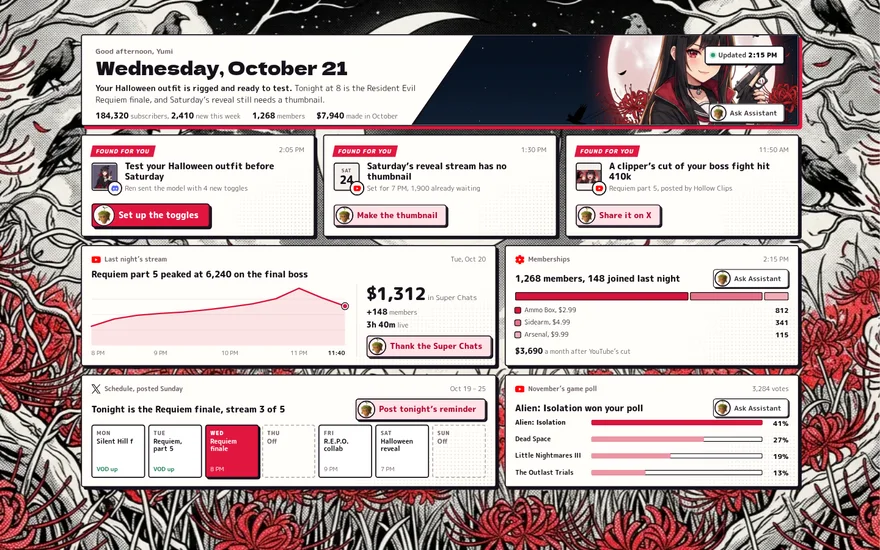
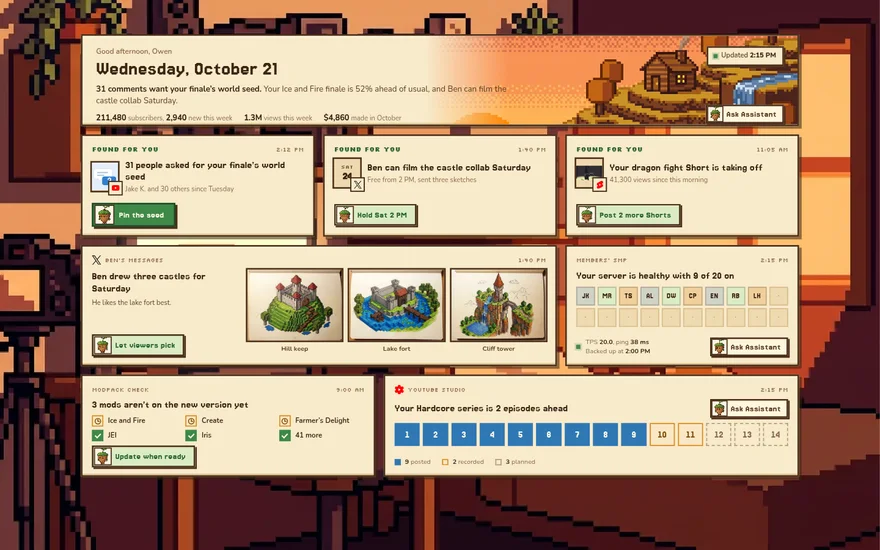
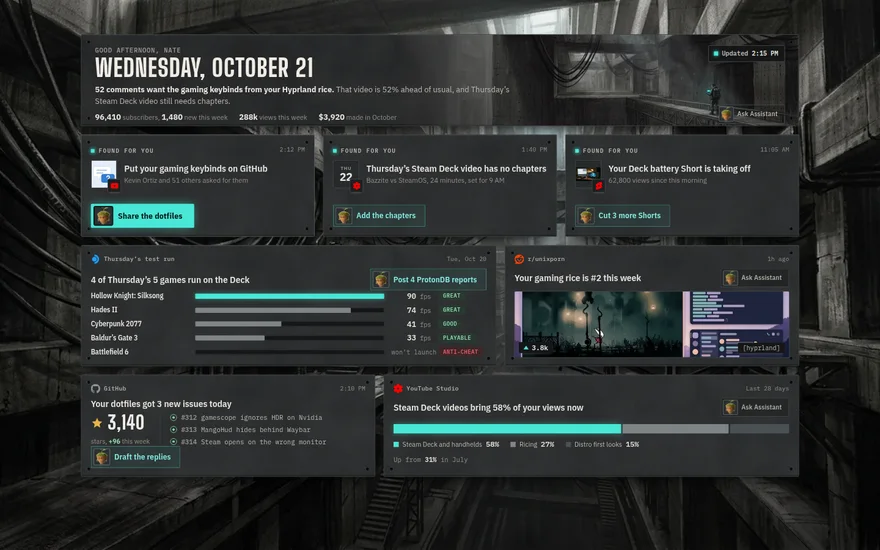
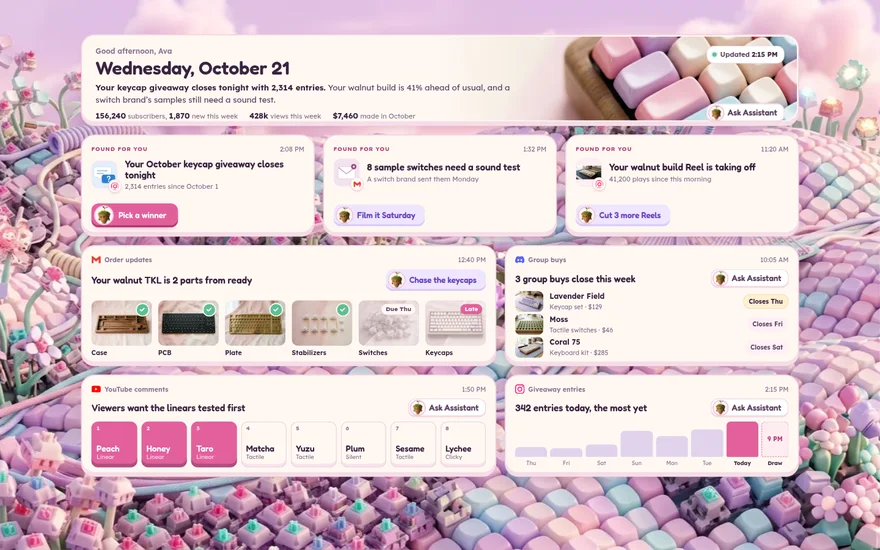
Each in its own place. Muse lets you change your agent: its name, personality, tone, avatar and tagline. Wabi puts its widgets on your iOS or Android home screen. Biom restyles the whole app by asking: one request gives a page a new theme and background, with every card following its colors. Free includes 1 restyle a week, Personal 3 and Power 5. These are six gaming creators’ Bioms, the same app in six looks.


Which one builds the pages you need?
Biom builds agentic automation pages: pages its agents keep updating all the time. Most people don’t know which ones they want until they see them, so from your project and your accounts Biom figures out which you need, like trend research in your niche or sponsors that fit your stream, and builds them with nothing to deploy. It makes a regular app too, when you ask for one.
Muse and Wabi build apps for the moment you ask. Muse makes what Meta calls Artifacts: documents, a dashboard tracking your spending, interactive tools and web apps, saved to your Library. Wabi builds small apps inside your threads, a shared calendar, a map, a vote or a tracker, and starts your first ones when you connect your email.
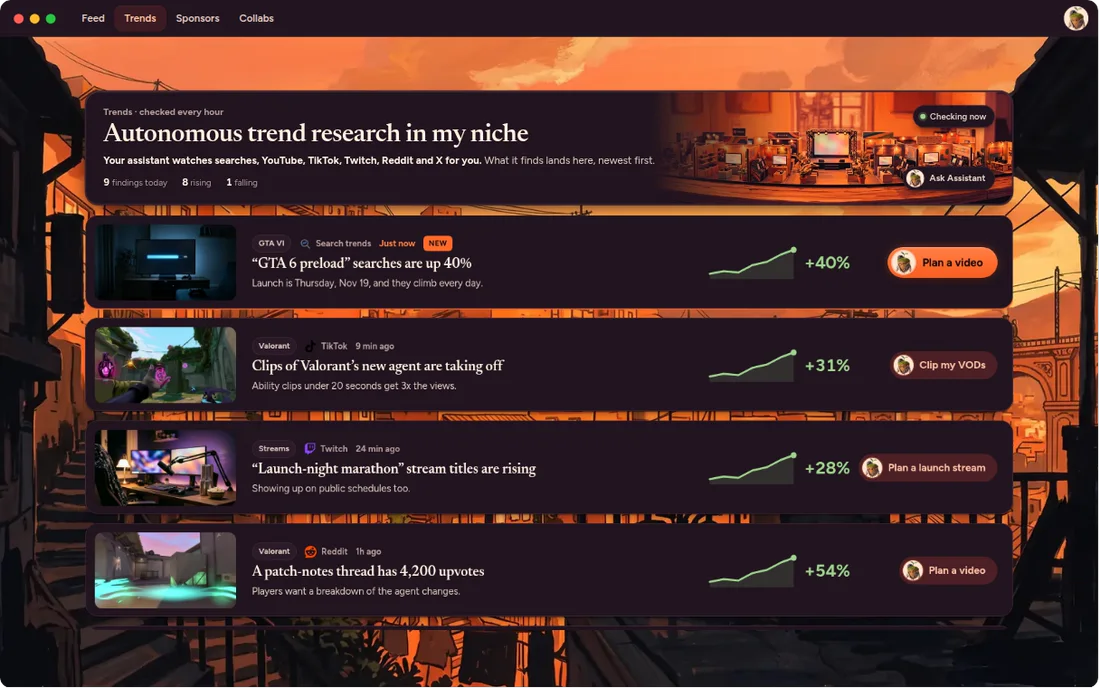
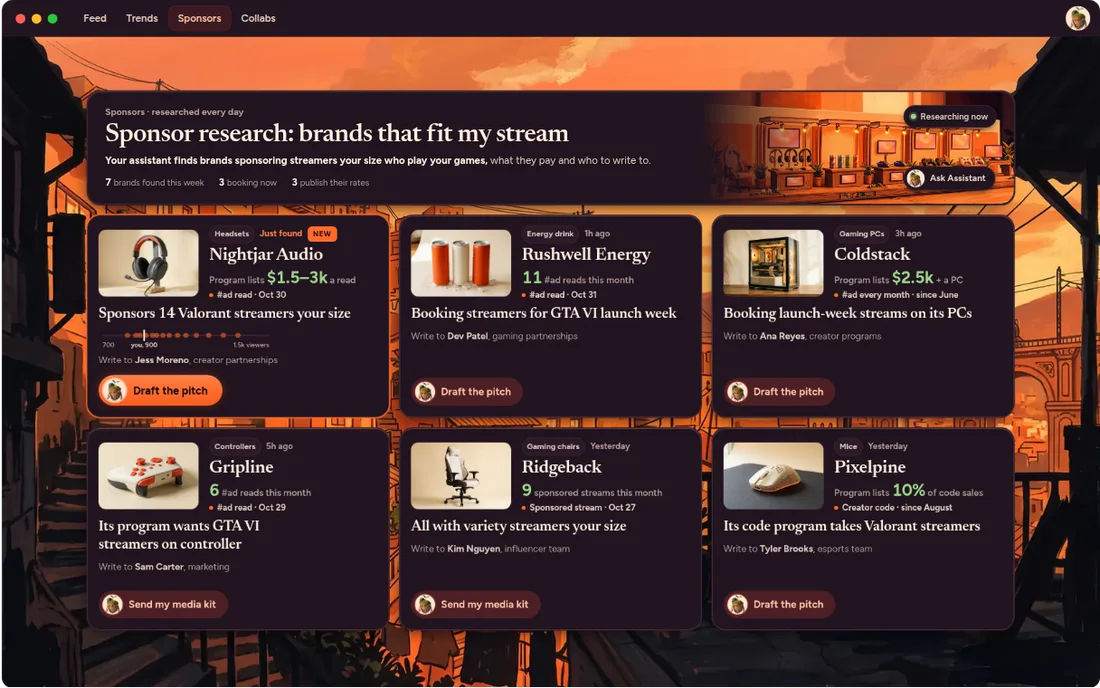
Two of the pages Biom set up for Danny on its own, beside his Feed.
Do the pages keep themselves up to date?
Biom’s do, all the time. Every page is a grid of cards, each card a module of its own, and Biom’s agents keep updating them, even with your laptop closed. On Danny’s Trends page what it finds lands at the top, newest first, and on his Sponsors page a brand it just found settles in beside the rest, while the layout holds still.
Meta and Wabi say less about it. Meta calls one kind of Muse Artifact a live dashboard but doesn’t describe how it refreshes, and Muse’s scheduled tasks report back as messages in the chat. Wabi’s pages don’t say whether an app keeps itself current.
Which one does the work?
All three do, and all three ask before anything important goes out. On Biom, one button on each card opens a plan with its drafts, and your assistant does the work once you approve, through each app’s official API. Muse books, buys and fills in forms on a computer of its own, and Wabi books appointments, handles returns and finds refunds.
Can your own AI, like Claude or ChatGPT, build on them?
On Biom, through MCP, which is planned: your own AI reads your pages and sends the cards it writes, and Biom builds, checks and hosts them. Muse’s connectors work the other way, bringing your apps into Muse, from Gmail and Instagram to Notion and Shopify, and Muse can build a custom connector for any service with an API. Meta’s developer products give you its models, through the Meta Model API and Muse Code, rather than a way into your Muse. Wabi’s pages list no API or MCP server.
Which one fits a streamer or YouTuber?
Biom is made first for gaming creators. It connects YouTube, Twitch, Instagram, Gmail, Google Calendar, Google Drive and Google Sheets, and once you approve it replies to comments, uploads and schedules videos and Shorts, posts Reels and sets your Twitch title through each app’s official API. Muse connects Instagram, a professional account’s analytics included, Facebook and Meta ads, and can build a custom connector for a service it doesn’t list. Wabi lists email, calendars, Google Drive, Slack, Notion, GitHub, Telegram and WhatsApp.
Where are Muse and Wabi ahead?
Today, in a lot of places. Both are out now, with apps for iPhone, Android and Mac, and Muse also works on the web and in WhatsApp. Wabi is free, and Muse is free for most of what people need, while Biom’s Free plan is 10 assistant actions a month. Wabi is made for planning with other people, in threads you share. Muse runs errands across your whole life: it books, buys with purchase protection, fills in forms and negotiates on a computer of its own.
They’re big, too. Meta says more than 10 million people in the US and Canada have set up Muse, and Wabi raised $55 million at a $1.25 billion valuation in October 2026.
More questions
Is Biom a Muse alternative?
Not for errands. Muse books, buys, fills in forms and negotiates across your whole life, on a cloud computer of its own. Biom is built around one ongoing project, like your channel: it curates what matters to it, builds pages for it and does the work in your accounts once you approve.
Is Biom a Wabi alternative?
Not for planning with other people. Wabi is a messenger whose threads you share with your partner, family or friends, each with apps Wabi builds for it. Biom is built around your own ongoing project, like your channel, with a Feed of what matters to it and pages for going deeper.
Does Muse make dashboards?
Yes, when you ask. Muse calls them Artifacts: documents, dashboards, trackers, interactive tools and web apps, sent in the chat and saved to your Library, where you can edit or download them and share them once you approve. Biom builds the pages your project needs automatically, and keeps them running.
Does Wabi build apps?
Yes. Wabi makes small apps inside your threads, like a shared calendar, a map and itinerary, a vote or a tracker. When you connect your email it starts your first threads and apps, and you add more by asking.
Do Biom’s pages keep themselves up to date?
Yes. They’re agentic automation pages: each is a grid of cards, each card a module of its own that Biom’s agents keep updating all the time, even with your laptop closed. New findings arrive where the page keeps them, and the layout doesn’t shift under you. Meta calls one kind of Muse Artifact a live dashboard but doesn’t describe how it refreshes, and Wabi’s pages don’t say whether an app keeps itself current.
Can Muse or Wabi connect to YouTube or Twitch?
Their pages don’t list it. Muse names Instagram, Facebook and Meta ads among its connectors and can build a custom connector for any service with an API. Wabi lists email, calendars, Google Drive, Slack, Notion, GitHub, Telegram and WhatsApp. Biom connects YouTube, Twitch, Instagram, Gmail, Google Calendar, Google Drive and Google Sheets.
Are Muse and Wabi free?
Wabi is, for now. Muse is free with a weekly usage limit, then $20 a month for Power or $100 for Maximum, or extra tokens bought once. Biom’s Free plan is 10 assistant actions a month, with Personal at $20 and Power at $100.
Do Muse, Wabi or Biom send things on their own?
Not the important things. By default Muse asks before sensitive actions like sending an email or making a purchase, and Wabi checks with you before important actions. Biom sends nothing until you approve its plan or change it with your assistant first.
Can my own AI build on Biom?
Yes, through MCP, which is planned. Your own AI, like Claude, reads what’s on your pages and sends the cards it writes, and Biom builds them, checks them by running their own tests and hosts them on your page. What it builds isn’t metered on any plan, within a fair-use limit against abuse.
Can I use Biom now?
Not yet. Biom launches December 1, 2026; until then, every plan on the site joins the waitlist. Muse and Wabi are both available now.
Questions? Read the FAQ
Join the Waitlist